Hedge Calculator
18+ · BET RESPONSIBLY
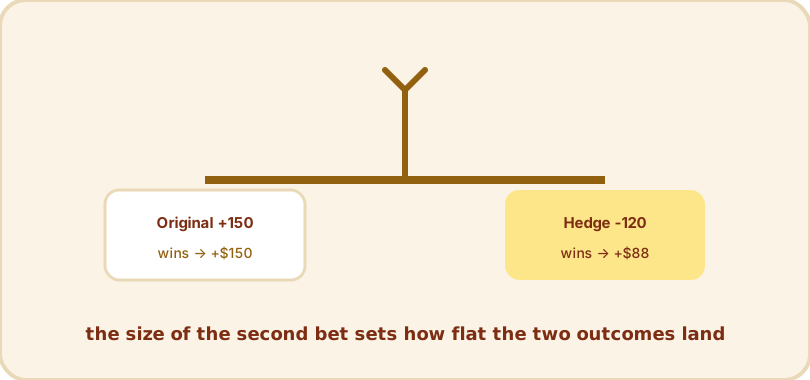
Your ticket is one win from cashing and the other team is offering a price. A hedge bets the other side in a size chosen so the two endings land where you want — this calculator solves that size instantly.
The formula, by hand
The calculator's core is one division. Convert both prices to decimal (the converter does it), then: hedge stake = original stake × original decimal ÷ current decimal. Example: $100 at +150 (decimal 2.50), other side now −120 (decimal 1.833). Hedge stake = 100 × 2.50 ÷ 1.833 = $136.36. Check the endings: original wins → +$150 − $136.36 = +$13.64. Hedge wins → $136.36 × 0.833 − $100 = +$13.61. Nearly identical — the 3-cent gap is the market margin at work, exactly as predicted.
Three reasons people hedge
Lock a profit when a futures ticket is one game from cashing and the finale price allows a guaranteed gain. Reduce variance when a large potential win is more stress than the downside is worth — equalizing outcomes trades ceiling for certainty. Cut a loss when the original read has clearly failed and the other side's price still leaves a cheaper exit than riding to zero. The calculator's four cards map to all three: hedge size, outcome A, outcome B, and total at risk.
The honest cost
Run any example twice and notice the "guaranteed" number is smaller than simply winning — that difference is the market's margin plus the price move you are paying to escape. Hedging is a risk decision, not an edge decision; nothing about it creates expected value. It converts uncertainty into certainty and charges you for the service.
Hedge sizing presets
| Goal | How to aim the calculator |
|---|---|
| Equal outcomes (full lock) | Use the computed stake as-is — both cards land the same |
| Favor the original bet | Hedge less than the computed stake: bigger upside, smaller floor |
| Guarantee no loss at all | Only possible when current odds are longer than your original — the card will show both outcomes positive |
| Cap a bad night | Hedge at any size between: the two cards show exactly where floor lands |
When hedging is the wrong move
Two common traps. Hedging a winning ticket too early: the futures ticket that hedges before the final round usually surrenders most of its expected value for comfort — run the numbers both ways before deciding that peace of mind is worth the price. Hedging out of a read you still believe: if your original analysis holds and the price moved favorably, the market is offering you more profit for the same risk — hedging there pays away your own edge. The calculator gives the number; whether to use it remains a judgment about the bet, not the arithmetic.
Frequently asked questions
What is the hedging formula?
Hedge stake = your original stake × original decimal odds ÷ the current decimal odds on the other side. That size equalizes the two outcomes as closely as the prices allow.
Why can't both outcomes land exactly equal?
Because the current market carries a bookmaker margin: the two implied probabilities sum to more than 100%. That overround is the cost of exiting — the hedge locks a result, not a free lunch.
Is hedging the same as arbitrage?
They share arithmetic but not the setup. Hedging exits a bet you already hold (prices have moved since); arbitrage places both sides at once across books when the prices themselves are out of line.